We breathe thousands of times per day without thinking about it, but the simple act of breathing can have a huge impact on our daily health. During treatment I often consider breathing patterns and the influence on the condition that the person is visiting the clinic for.
Breathing and stress
Breathing is influenced by our fight or flight/rest and digest nervous systems. When your body senses a threat it reacts effectively. For example, if you are being chased by a lion you need to run, during this time you would take shallow breaths for effective running, when the danger has gone you would be able to stop to rest your body which will go back to deeper breathing allowing the rest and digest system to work effectively. Generally, nowadays we don’t need to run from lions, but our body responds to stress in the same way, you will often notice when you are working to a deadline or feeling tense that your breathing is happening in your upper body, this is effective short term. But when the body is not able to recognise when the threat has stopped it can lead dysfunctional patterns which can have an influence on our health. Luckily breathing effectively is a free and simple way that we can affect our health in a positive way.
Common signs and symptoms of breathing dysfunction
Often people that visiting for osteopathy treatment that have issues with deep breathing discuss experiencing issues such as:
- Neck pain
- Jaw pain
- Shoulder muscle tension
- Headaches
- Upper back pain
- Rib pain
- Panic attacks
- Unexplained digestive problems
- Inability to take a deep breath
- Frequent sighing
- Dizziness
- Feeling overtired
The motion of breathing
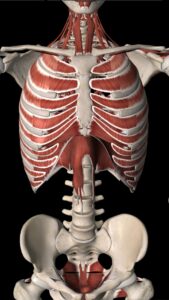
When we breathe deeply the ribs move and diaphragm moves downwards to allow the lungs to inflate. Tension in any of the muscles that attach to the ribs can make it hard to breathe deeply. When we breathe in our upper chest the muscles that attach to the upper ribs and collarbone work harder. With these upper muscles overworking they can start to feel tight. Another area that is often overlooked in breathing are the pelvic floor muscles. When we take a deep breath the pelvic floor muscles relax to allow space for the internal organs as the diaphragm moves down. Tension is this region could be caused by or be the cause of ineffective breathing patterns.
Other causes of abnormal breathing patterns include:
- Emotional trauma
- Anxiety disorders
- Asthma, COPD, and respiratory infections or illnesses
- Sleep apnoea
- Sinus issues
- Allergies
Osteopathic approach to treating issues related to dysfunctional breathing
As an osteopath I always consider how breathing may be influencing your body and your ability to heal. When you are able to breathe effectively you can reduce stress and tension and regulate your nervous system, and studies have shown that this can reduce inflammation which makes it a useful tool for pain management. When you visit my clinic in Exeter, I will assess and we will discuss any factors that are concerning you. I may treat and help you to understand areas that may be affecting your breathing. If it is necessary I will help you to develop your breathing technique and provide you with simple practices that can help you day to day.
If you feel that you need support with any factors discussed in this blog book an appointment or click on the chat button to ask a question.